
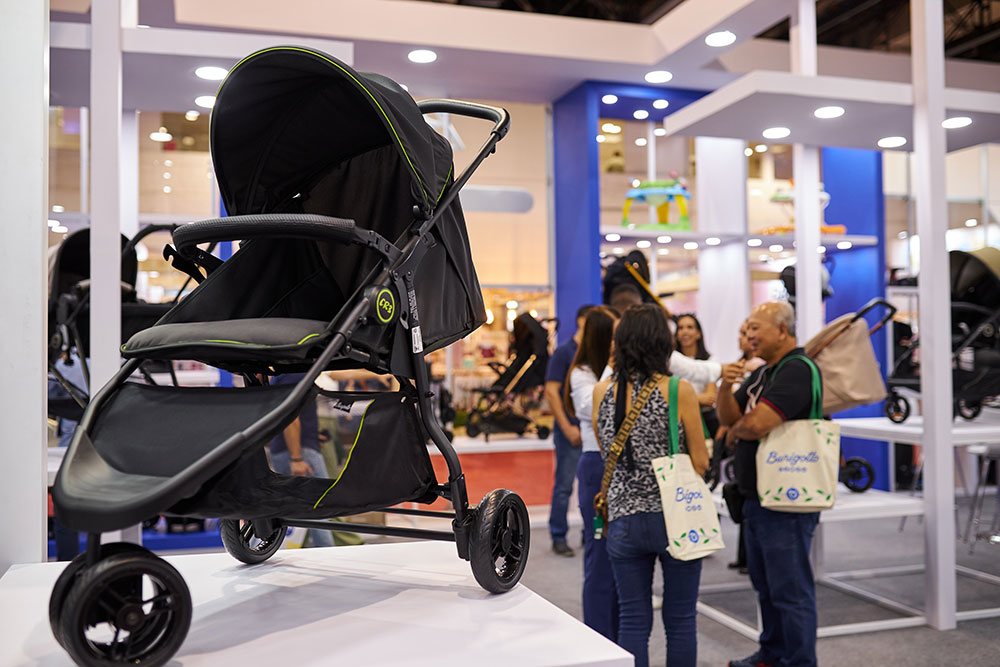
Brazil’s baby and childcare market offers opportunities for international brands, particularly in higher-value categories such as strollers, child car seats, and nursery furniture, which continue to grow despite declining birth rates. As consumers place greater value on safe, durable, and multifunctional products, international manufacturers have opportunities to expand through local distributors, manufacturing partnerships, or their own operations.
Contents
-
Why Does Brazil’s Baby and Childcare Market Attract International Brands?
-
Which Product Categories Offer Opportunities for International Manufacturers?
-
Regulations, Taxation, and Distribution in Brazil
-
How to Choose the Right Market Entry Strategy for Brazil
-
Fit Pueri Expo and Business Connections in the Brazilian Market
-
Frequently Asked Questions
Brazil’s baby and childcare market presents opportunities for international brands looking to expand their presence in Latin America. Despite declining birth rates, categories such as strollers, child car seats, and nursery furniture continue to record revenue growth, reflecting changes in families’ purchasing priorities.
Circana’s market data shows positive results in categories related to mobility, transportation, and everyday baby care. Safety, convenience, durability, and technological features are among the attributes consumers consider when choosing these products. International manufacturers offering differentiated solutions may find consumers willing to invest in features that simplify daily routines and support children’s development.
To capitalize on this potential, companies need to understand the conditions of operating in Brazil. Mandatory certifications, import costs, logistics, and competition from established businesses all influence pricing strategies and the choice of sales channels.
Why Does Brazil’s Baby and Childcare Market Attract International Brands?
Changes in consumer purchasing behavior show that industry revenue is also influenced by how much families spend on each purchase. Products with additional features, durable materials, and longer lifespans can justify higher prices, particularly when they offer tangible benefits in everyday use.
This creates room for different market positioning strategies. Premium brands can appeal to consumers interested in advanced safety and comfort features, while competitively priced manufacturers can reach families seeking a balance between quality and affordability.
Sales figures also show growth in the number of products sold. According to Circana’s research covering November 2024 through October 2025, the segment monitored by the market research firm recorded a 10% increase in revenue and a 9% rise in sales volume.
The presence of experienced domestic manufacturers makes the market highly competitive. Brazilian companies serve different price segments and maintain established relationships with retail chains, creating additional challenges for new entrants.
A foreign brand’s success may therefore depend on technical features that competitors have yet to explore, an attractive commercial strategy, or the ability to adapt its product portfolio to Brazilian consumer preferences.
Which Product Categories Offer Opportunities for International Manufacturers?
In the 12 months ending October 2025, the mobility furniture category, which includes products such as high chairs and travel cots, recorded 23% revenue growth. Travel products, including strollers and child car seats, grew by 14%.
The longer-term performance of strollers and child car seats is also noteworthy. Since 2022, strollers have recorded average annual growth of 23%, compared with 13% for child car seats, according to data presented by Circana at Fit Pueri Expo 2026.
These results provide useful benchmarks for assessing which products may have the greatest commercial potential in Brazil, taking into account competition, price ranges, and families’ needs.
In the stroller category, compact folding systems, lightweight frames, and modular configurations can appeal to consumers who use public transportation, own smaller vehicles, or need to make better use of limited space at home. Models designed to accommodate different stages of a child’s development also offer advantages in terms of durability and long-term use.
For child car seats, protective features, ease of installation, and compatibility with different vehicles are important considerations. The benefits of specific child restraint technologies must be clearly communicated while complying with Brazilian safety requirements.
There are also opportunities in feeding, breastfeeding, and everyday care accessories. Ergonomic products, easy-to-clean materials, and innovative features attract consumers who follow international product launches on social media. Exposure to items not yet available in Brazil, often featured by influencers and families living or traveling abroad, can generate demand for new products in the domestic market.
Combining multiple functions in a single product is another feature worth considering. A portable cot designed for both home use and travel, for example, can offer greater versatility for families, provided it meets the safety requirements applicable to its functions.
The success of these solutions in Brazilian retail will depend on their final price and how clearly their benefits are communicated to consumers.
Regulations, Taxation, and Distribution in Brazil
Entering the Brazilian market involves requirements that must be considered before the first import operation, particularly in product categories related to child safety.
In the durable baby equipment segment, several products are subject to mandatory certification by Brazil’s National Institute of Metrology, Quality and Technology (Inmetro). Strollers, cribs, and child restraint systems for vehicles are covered by specific conformity assessment regulations.
These regulations establish technical requirements and procedures that vary by product. A child car seat legally sold in another country may need to undergo a separate certification process before it can be marketed in Brazil, even if it already holds international approvals.
For categories such as children’s cosmetics and hygiene products, companies must also comply with the regulations of the Brazilian Health Regulatory Agency (Anvisa), depending on each product’s classification and characteristics.
Beyond regulatory documentation, companies must assess the total cost of importing goods into Brazil. Import taxes, customs expenses, transportation, storage, and exchange rate fluctuations all affect final pricing. The composition of these costs varies according to tariff classification, product origin, and the terms of the transaction.
In practice, a stroller that is competitively priced overseas may reach Brazilian retailers at a significantly higher price than initially expected once operating expenses and distributor and retailer margins are included. This calculation is essential when assessing a product’s competitiveness.
Competition presents another challenge. According to Circana, the 12 largest manufacturers account for more than 80% of sales tracked by the firm’s retail panel. This concentration reflects the strong presence of established companies and the challenge of competing with suppliers already familiar to retailers.
Regional differences also affect commercial planning. Brazil’s vast territory, variations in consumer preferences, and transportation costs may make it more practical to begin selling in selected markets before gradually expanding distribution as supply capabilities develop.
After-sales service also requires planning from the outset. The availability of replacement parts, technical assistance, warranties, and Portuguese-language customer support is particularly important for higher-value equipment or products with mechanical components. These services can influence the confidence of both retailers and consumers.
How to Choose the Right Market Entry Strategy for Brazil
Choosing a commercial structure depends on the available investment, expected sales volume, and the level of control a manufacturer wishes to maintain over its operations.
One option is to partner with a Brazilian distributor responsible for importing products and supplying retail channels. This approach allows manufacturers to benefit from existing business relationships and the expertise of professionals familiar with local requirements.
Establishing a local subsidiary offers greater control over market positioning, pricing, and customer relationships, although it involves higher administrative and operating costs.
Licensing agreements and manufacturing partnerships with companies already operating in Brazil are also possible. Depending on the arrangement, these structures may support local manufacturing or assembly, reducing dependence on imported finished goods.
The table below outlines the main characteristics of each option.
|
Market Entry Model |
Main Advantages |
Key Considerations |
Best Suited For |
|
Local Distributor |
Access to established retailer networks, local market knowledge, and lower initial investment |
Less control over commercial operations and shared profit margins |
Brands looking to test market acceptance |
|
Local Subsidiary |
Greater autonomy over pricing, marketing, distribution, and customer relationships |
Fixed costs, administrative infrastructure, and regulatory management |
Manufacturers with long-term expansion plans |
|
Licensing or Manufacturing Partnership |
Access to existing industrial capacity and logistics infrastructure in Brazil |
Contract negotiations, quality control, and technology transfer |
Companies interested in local production or larger-scale operations |
The decision should reflect the company’s product portfolio and expansion objectives. A manufacturer with a small range of specialized products may prefer working with an experienced importer, while a company offering multiple product lines and expecting substantial sales volumes may benefit from establishing its own local operation.
Before signing contracts, companies should assess their partners’ market coverage, service capabilities, responsibilities for product regulatory compliance, and exclusivity terms. A gradual market entry, starting with a limited selection of products, makes it possible to monitor performance and make adjustments before increasing investment.
Fit Pueri Expo and Business Connections in the Brazilian Market
For international manufacturers, direct contact with professionals who understand Brazil’s retail market can make it easier to identify partners and evaluate new business opportunities.
Held in São Paulo, Fit Pueri Expo brings together manufacturers, importers, distributors, retailers, and professionals working in the baby and children’s products industry. Its exhibition area and event program offer opportunities to discover product launches, explore solutions developed by companies from different countries, and build business relationships.
During the event, a brand interested in introducing a stroller range to Brazil can speak with potential representatives to learn which configurations are most in demand, what questions customers commonly ask, and which commercial terms are typical in the industry.
These conversations provide valuable insights for refining product portfolios, evaluating distribution proposals, and identifying Brazilian companies interested in representing international brands or expanding their catalogs.
Interested in introducing your brand to Brazil’s baby and childcare market? Click here to explore exhibiting opportunities and present your products to potential business partners.