
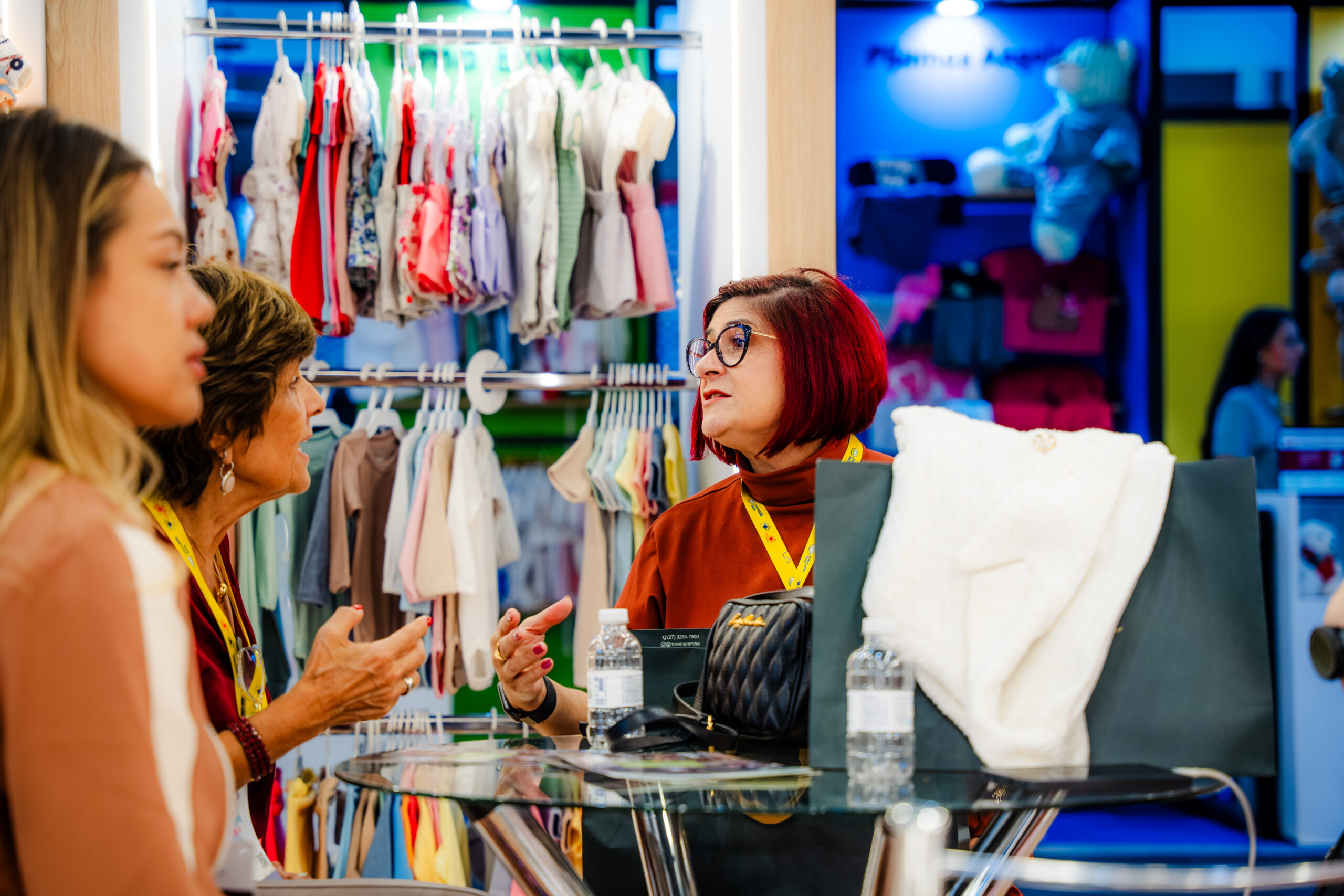
Quick summary: Children’s products can reach consumers through a variety of channels beyond specialty stores, including supermarkets, pharmacies, marketplaces, department stores and cash-and-carry retailers. In 2027, Fit Pueri Expo will take place alongside Anuga Select Brazil, bringing together brands and buyers from different sectors and creating new opportunities to do business.
Contents
- Supermarkets can also showcase children’s products
- Pharmacies have expanded their baby and children’s product ranges
- Marketplaces help brands reach new consumers
- Other retail formats can open new doors
- Finding new channels means reaching the right people
- Frequently Asked Questions
There are more places to sell children’s products
When the goal is to sell more children’s products, specialty stores are often the first channel that comes to mind. They remain an important part of the market, but they are far from the only way to reach families.
Supermarkets, pharmacies and marketplaces already carry a wide range of products for babies and children. Department stores, cash-and-carry retailers and multibrand e-commerce stores can also be part of the mix, depending on the type of product, price range and target audience.
In this article, we explore five ways to expand your points of sale, along with strategies for choosing the right product mix for each channel.
- Supermarkets can also showcase children’s products
Brands working with lightweight baby care products can find good opportunities in supermarkets. Teethers, silicone spoons and feeders, children’s plates and cups, and bath sets are just a few examples of products that fit naturally into families’ everyday shopping routines. The health and beauty section, where some of these items may be displayed, accounted for 5.7% of revenue among the supermarkets analyzed in the 2024 ABRAS Ranking, based on 2023 data.
Brazil’s food retail sector receives around 30 million consumers every day, according to ABRAS. Being present in this type of store puts brands in front of families who already shop there regularly.
Where these products are positioned in the store also matters. This is where cross-merchandising comes in, placing complementary products close together to make shopping easier and increase the visibility of items related to what customers are already looking for.
A silicone feeder, for instance, can be placed near the fruit and vegetable section, creating a direct connection with the introduction of solid foods. Silicone spoons work well near ready-made baby food, bath sets alongside children’s hygiene products, teethers near toys, and children’s cups close to milk and juice aisles.
These combinations place products close to an existing customer need. The same idea can also be incorporated into a sales pitch to supermarkets. Instead of simply offering another item for the shelf, brands can show how the product complements categories the retailer already sells and suggest ways to display it.
- Pharmacies have expanded their baby and children’s product ranges
Children’s products already represent a significant segment in pharmacy retail. Euromonitor data released by Sincofarma SP showed R$7.6 billion in baby care sales through the pharmacy channel in 2022. Of this total, R$3.6 billion came from diapers, R$2.3 billion from nutrition products and R$1.6 billion from children’s toiletries.
Another study, conducted by Farmácias APP, found that children’s products represented 10% of the total revenue from pharmacy items analyzed. Within the category, food accounted for 52.2% of sales and hygiene products for 39.3%.
So, what can be sold through this channel? The list mainly includes products related to feeding, hygiene and everyday baby and child care, such as:
- diapers and baby wipes;
- children’s shampoos, conditioners and soaps;
- baby hygiene and care products;
- baby food and other foods for children;
- baby bottles, nipples and pacifiers;
- children’s vitamins and supplements, in accordance with the regulations that apply to each category.
Repeat purchases are one of the main advantages of this channel. Diapers, wipes and hygiene products run out and need to be replaced, bringing families back to the category and creating further sales opportunities for brands on pharmacy shelves.
- Marketplaces help brands reach new consumers
Online, a small brand can sell to someone in another city or even another state. This reach helps explain the importance of marketplaces for the children’s sector, particularly in categories where consumers tend to research and compare options before buying.
Strollers, children’s furniture, larger toys, clothing and product kits are a few examples. Digital channels make it possible to offer a broader catalog, provide detailed measurements and product information, showcase different models and reach regions where the brand does not yet have resellers.
According to Nuvemshop data, online sales of children’s products grew 44% in 2024, with more than 185,000 additional items sold compared with the previous year.
Toys and children’s fashion are also among the 10 best-selling categories in online retail, according to ABComm data cited in the report.
Children’s market data in e-commerce
| Indicator | Data |
| Online sales of children’s products | 44% growth in 2024 |
| Product volume | More than 185,000 additional items sold compared with the previous year |
| Leading categories | Toys and children’s fashion are among the 10 best-selling categories in online retail |
| Brazilian e-commerce | Online retail generated R$351.4 billion in 2024 |
Source: E-Commerce Brasil, based on data from Nuvemshop, ABComm and NielsenIQ Ebit.
Logistics are another advantage of marketplaces. For small retailers, organizing deliveries to other cities or states can be challenging, particularly in the early stages. Many platforms already offer integrated shipping and delivery solutions, simplifying this process and making it possible to sell to other regions without building an in-house distribution structure.
Sales also depend on how each item is presented. Photos, descriptions, delivery times, prices, reviews and stock availability all help consumers choose between similar products. A small business can start with its best-selling items, monitor performance and gradually expand its catalog.
- Other retail formats can open new doors
If 61% of baby and children’s fashion sales take place through specialty retail, the remaining 39% is distributed across other channels, according to IEMI data published in 2026. This represents a significant share for brands looking beyond traditional children’s stores and can include cash-and-carry retailers, department stores, large retail chains and other formats.
In cash-and-carry retail, price and quantity carry more weight. Multipacks, larger packages and frequently replenished products may be a better fit for this format. Diapers, wipes, hygiene products, socks and basic clothing are examples of categories that lend themselves to higher-volume, value-oriented purchases.
Department stores work with a different mix. Clothing, footwear, accessories, toys and baby care products can all be sold within the same retail operation. For brands looking to enter this channel, factors such as collections, price range, presentation and the ability to supply the quantities agreed with the retailer are important considerations.
The relationship with multibrand e-commerce stores is different from marketplaces. Here, a brand can become a supplier to an online retailer that already carries a curated selection of children’s products. It is another way to reach new consumers without relying on a physical point of sale, particularly for fashion, accessories, home décor and other categories that fit the retailer’s profile.
Even the way a product is sold can change. An item sold individually in a specialty store might be offered as part of a kit in cash-and-carry retail, have different options online or be included in a smaller selection for a department store. Adapting the product mix to the profile of each channel can make a real difference in sales.
- Finding new channels means reaching the right people
Once you have mapped out where your brand could go next, one of the most challenging parts begins: reaching the people who actually decide which brands and products make it onto shelves, e-commerce sites and into retailers’ inventories.
Finding the buyer responsible for a major retail chain, arranging a meeting or presenting products to companies outside your region is not always easy. Building those connections takes time and access to the right people.
Fit Pueri Expo helps bring these two sides of the children’s market together. In 2026, the event welcomed more than 7,000 visitors from 27 countries and 220 exhibiting brands. Its Business Matchmaking Program brought together 54 major buyers, with an estimated R$25 million in business opportunities.
In 2027, there will be an additional advantage: Fit Pueri Expo and Anuga Select Brazil will take place simultaneously, from April 6 to 8, at Distrito Anhembi in São Paulo.
Anuga Select Brazil is an important meeting point for the food and beverage retail sector, bringing together professionals from supermarkets, distributors and wholesalers. In 2026, the event welcomed more than 14,000 visitors and 550 brands, as well as buyers from Brazil and abroad.
For brands looking to place their products in supermarkets, having the two events take place together creates an important advantage. Companies that manufacture children’s food, feeding accessories or other products suited to food retail will be in the same venue as decision-makers from the sector. At Fit Pueri Expo, the simultaneous events will make it easier to connect with buyers from different retail segments.
Traditional channels will also continue to have a strong presence throughout the exhibition. Children’s retailers, chains and distributors attend the event looking to refresh their product portfolios. In 2026, even a pharmacy chain took part in the Business Matchmaking Program in search of new baby care products for its physical and online stores.
If your goal for the coming year is to introduce your brand to new buyers, expand distribution and discover how far your products can go, Fit Pueri Expo brings these conversations together in one place over just three days.
Want to present your products to buyers looking for what’s new in the children’s market? Secure your space at Fit Pueri Expo 2027.
Frequently Asked Questions
- Where can I sell children’s products besides specialty stores?
Supermarkets, pharmacies, marketplaces, cash-and-carry retailers, department stores and multibrand e-commerce stores are some of the channels that can carry children’s products. The best choice depends on the category, price point, target audience and purchasing profile of each retailer.
- What children’s products can be sold in supermarkets?
Lightweight baby care products such as teethers, silicone spoons and feeders, children’s plates and cups, and bath sets are a few examples. Positioning these items near related categories can also help increase their visibility.
- How do I choose the best sales channel for children’s products?
Consider the type of product, price range, quantity, purchase frequency and consumer profile. In cash-and-carry retail, kits and frequently replenished products may perform better, while department stores and multibrand e-commerce retailers can accommodate different product mixes.
- How can I find buyers for children’s products?
B2B trade shows provide a way to present products directly to retailers, chains, distributors and other buyers. Fit Pueri Expo brings together professionals from across the children’s market and, in 2027, will take place simultaneously with Anuga Select Brazil, expanding access to professionals from other retail segments. Click_here