
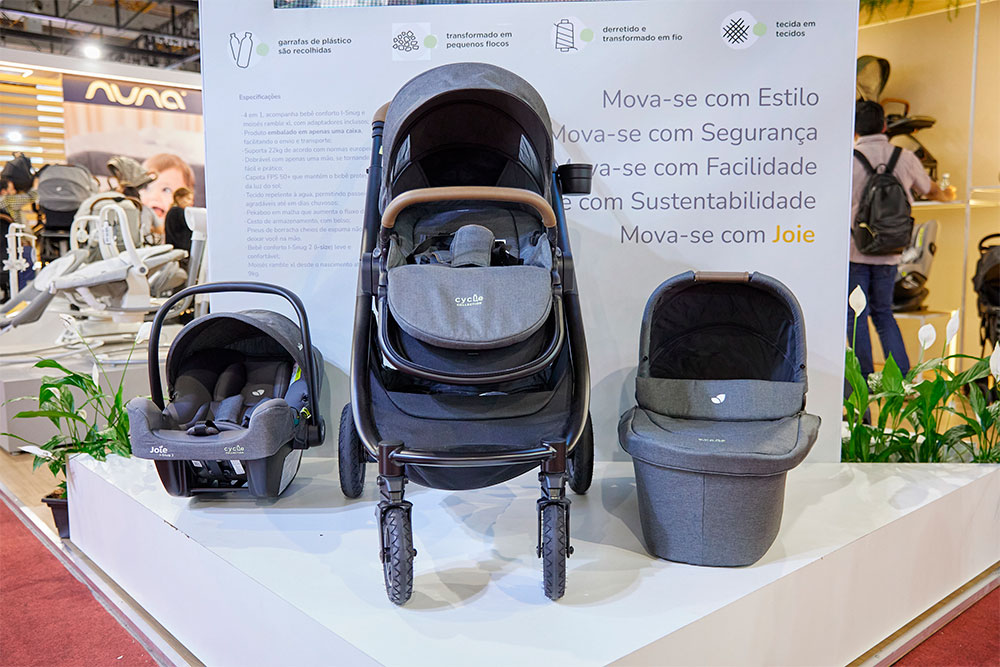
To secure a place at major retail chains, manufacturers and suppliers of strollers, car seats and child restraint systems need to meet Inmetro certification requirements, maintain reliable logistics operations and offer a competitive product range, attractive commercial terms and dependable after-sales support. Fit Pueri Expo supports this expansion by connecting brands with industry buyers, creating opportunities to showcase products, build partnerships and strengthen their presence in Brazil’s retail market.
Contents
-
Strollers and Car Seats at Major Retailers: What Are the Requirements?
-
How Do Logistics and Profitability Influence Retail Buying Decisions?
-
How Can Brands Build a Competitive Product Portfolio for Major Retailers?
-
Why Training, Product Displays and After-Sales Support Matter for Long-Term Retail Partnerships
-
How to Present Your Brand to Retail Buyers
-
Frequently Asked Questions
Securing shelf space at major retail chains presents a valuable growth opportunity for manufacturers, importers and distributors of strollers, car seats and child restraint systems. Selling through department stores, specialist retailers and e-commerce platforms can significantly expand a brand’s reach, but it also means meeting a range of technical, commercial and operational requirements. Understanding what buyers look for before adding a new product to their assortment can make a meaningful difference during negotiations.
This category comes with its own set of challenges. Beyond safety requirements, strollers and child restraint systems take up considerable space in distribution centres, require careful handling during transportation and often benefit from demonstrations that help customers understand their features.
From regulatory compliance to commercial strategy, several factors can determine whether a new brand makes it onto a retailer’s shelves. Here is what businesses should consider when preparing to work with major retail chains.
Strollers and Car Seats at Major Retailers: What Are the Requirements?
Regulatory compliance is the starting point for expanding distribution. In Brazil, strollers and child restraint systems used in vehicles are subject to mandatory certification by the National Institute of Metrology, Quality and Technology (Inmetro), under the regulations applicable to each product category.
Inmetro Ordinance No. 167/2021 sets out the requirements for strollers, while Ordinance No. 246/2021 governs child restraint systems, including infant car seats, child car seats and booster seats.
These regulations cover product testing, identification, documentation and procedures designed to verify compliance with safety requirements. Buyers may expect suppliers to provide evidence of valid certification and registration, where applicable, before commercial negotiations move forward.
An important regulatory update took effect in January 2026, making Inmetro registration mandatory for strollers designed for children weighing more than 15 kg and up to 22 kg, in accordance with the relevant regulatory classification.
An importer preparing to introduce a new car seat range, for example, needs to understand the requirements for each model and keep all supporting documentation organised. Certification details, user instructions and traceability information may form part of the retailer’s assessment.
This preparation also supports retailers’ risk management, particularly in a product category where potential defects, customer complaints and product recalls require careful attention.
How Do Logistics and Profitability Influence Retail Buying Decisions?
Two strollers with similar retail prices may have very different distribution costs because of their packaging dimensions. A more compact model, once folded and packed, may be easier to handle at a distribution centre and allow more efficient use of available freight space.
This is why package volume should be considered from the product development stage. Durable packaging designed for transportation can also reduce damage in transit and make better use of storage and shipping capacity.
Product identification is another important consideration. Correctly applied barcodes that follow GS1 standards make it easier for major retailers to register products and track them across their commercial and logistics systems.
Reliable order fulfilment also plays a part in negotiations. Large retailers may monitor metrics such as OTIF (On-Time In-Full), which measures whether orders arrive on schedule and in the agreed quantities. Delays, discrepancies between purchase orders and invoices, or stock shortages can disrupt replenishment and generate additional costs.
Buyers also assess the category’s profitability potential. Purchase prices must be compatible with target margins, operating expenses and the final selling price offered to consumers.
A strong commercial proposal should therefore demonstrate consistent supply capacity, realistic cost planning and terms that fit the retailer’s operating model.
How Can Brands Build a Competitive Product Portfolio for Major Retailers?
Once technical and operational requirements are in place, the next challenge is showing buyers why a particular product range deserves a place alongside established brands.
Product selection should reflect the retailer’s customer base, price positioning and sales channel. A specialist baby products retailer may carry a broader assortment, including models with specific features. A general merchandise retailer, on the other hand, may prioritise popular products with benefits that are easy for customers to understand.
For strollers, features such as one-hand folding, portability and compact dimensions can help a product stand out. With child restraint systems, compatibility with vehicle anchoring systems, ease of installation and suitability for different stages of a child’s growth are also worth highlighting.
These features should be communicated clearly, connecting technical specifications to practical consumer needs.
The best route into a major retail chain may also depend on the sales channel. One option is to start by selling through the retailer’s online marketplace, where third-party sellers can offer products under the platform’s terms and conditions.
This approach can provide an opportunity to assess demand, monitor customer reviews and collect information on sales and returns. Strong results may also support future negotiations for direct supply agreements, under which the retailer purchases the products to sell through its own operations.
For example, a brand that sees consistent online demand for a compact stroller could use that sales history to support a proposal for distribution in physical stores.
|
What Should Brands Prepare Before Negotiating with a Major Retailer? |
|
|
Regulatory Compliance |
Certifications, registrations and technical documentation |
|
Logistics |
Packaging dimensions, delivery lead times and supply capacity |
|
Commercial Terms |
Pricing, discounts and supply conditions |
|
Product Portfolio |
Features, price ranges and competitive advantages |
|
Performance |
Sales data, customer reviews and returns |
|
Support |
Staff training, technical assistance and after-sales service |
Why Training, Product Displays and After-Sales Support Matter for Long-Term Retail Partnerships
Securing an initial order from a major retailer is an important milestone, but maintaining that relationship also depends on how products perform in-store and the overall customer experience.
Consider two strollers with similar features. One is displayed with only basic product information. The other comes with a folding demonstration, clear explanations of its main features and a sales associate who can answer customers’ questions. The second presentation gives families more information to compare their options and make an informed purchase.
The value of product demonstrations is also supported by consumer behaviour research. A study published in the Journal of the Academy of Marketing Science found that step-by-step demonstrations showing how a product works can generate greater purchase intention than presentations that focus only on the final result.
Demonstration videos, short training sessions and QR code-linked resources can make it easier for sales teams to explain products, particularly when customers need guidance on adjustments, installation and safety features.
The customer relationship also continues after the sale. Questions about product use, technical support requests and replacement parts are all part of the retail experience and require appropriate responses. When brands have a clearly defined customer service process, retailers can handle these requests more efficiently.
How to Present Your Brand to Retail Buyers
Every stage discussed in this article matters, but what can ultimately make a difference in negotiations with major retail chains is a brand’s ability to turn these requirements into a compelling commercial proposal.
Presentation materials should include high-quality product photography, technical specifications, product and packaging dimensions, regulatory documentation, supply capacity and commercial terms. Rather than presenting an entire catalogue without distinction, brands should focus on the models best suited to each sales channel. A tailored proposal demonstrates an understanding of the retailer’s customer base and makes it easier to identify potential opportunities.
Direct contact with industry professionals can also strengthen these connections, particularly in a category where seeing products demonstrated can influence purchasing decisions.
For the past ten years, Fit Pueri Expo has helped bring manufacturers, importers, distributors and children’s product retailers together, providing a platform to showcase new launches, establish business contacts and develop commercial partnerships.
The 2026 edition featured 220 exhibiting brands and welcomed more than 7,000 visitors from 27 countries. Its Business Matchmaking Programme also brought together 54 major buying brands, with an estimated R$25 million in potential business opportunities announced.
These meetings give brands the opportunity to present their portfolios to prospective partners and gain a better understanding of market needs. With organised technical information and clearly defined supply terms, initial conversations can develop into more concrete business negotiations.
Looking to expand your brand’s retail presence and connect with new business partners? Click here to explore exhibiting opportunities at Fit Pueri Expo.