Quick summary: Private label in the children’s market is a business model in which a company outsources the manufacturing of products for babies and children and sells them under its own brand. Contract manufacturing can connect manufacturers with retailers, distributors, and companies looking to launch exclusive product lines. At Fit Pueri Expo, manufacturers can showcase their capabilities directly to buyers in the children’s sector and build partnerships that can take their products into new sales channels.
Contents
- A New Route into Retail
- Private Label Brings Manufacturers and Retailers Closer Together
- The Children’s Market Offers a Wide Range of Manufacturing Possibilities
- What Changes When a Company Starts Manufacturing for Other Businesses
- New Sales Channels Can Mean New B2B Customers
- Strong Projects Begin Before Production Starts
- Frequently Asked Questions
A new route into retail
Private label can open up a new commercial avenue for companies that already have expertise in manufacturing clothing, childcare products, personal care items, accessories, and other categories for babies and children. Rather than focusing exclusively on their own brands, manufacturers can use their production capabilities and technical expertise to develop exclusive lines for retailers, distributors, and other businesses.
In the first half of 2026, private-label products in Brazil grew 10.9% in volume and 11.9% in value, according to NielsenIQ data presented at PL Connection 2026. Over the same period, the product baskets analyzed as a whole grew by 0.9% and 5.8%, respectively. Another figure stands out: 58% of consumers say they intend to buy more private-label products.
From a manufacturing perspective, this trend can provide access to customers that already have established sales channels and a strong understanding of their audiences, but need partners capable of turning an idea into a finished product. In the children’s market, the possibilities range from apparel and baby essentials to cosmetics, feeding products, and childcare items.
Private label brings manufacturers and retailers closer together
Private label is a model in which one company manufactures a product that is sold under another company’s brand. A pharmacy chain, for example, may hire a cosmetics manufacturer to develop its own range of children’s shampoo, soap, and moisturizer. The brand consumers see on the shelf belongs to the retailer, even though production is handled by a manufacturing partner.
This type of partnership can take different forms. Some projects are based on products that are already part of the manufacturer’s portfolio and are adapted with specific packaging and branding. Others start almost from scratch, involving decisions about materials, formulations, sizes, finishes, and other features based on the audience the brand wants to reach.
The growth of private labels in Brazil is increasing the number of potential buyers for this type of service. Data released by the Brazilian Association of Private Labels and Outsourcing (ABMAPRO) projected category sales of R$153 billion in 2025, nearly 16% higher than the previous year. Among companies operating under this model, 40% reported annual growth of more than 20%.
Consumer perceptions have also changed. ABMAPRO research indicates that 76% of Brazilians believe the quality of private-label products has improved. Price remains important, but purchasing decisions are also shaped by trust, variety, and how well products meet consumers’ needs.
This perception is particularly important when children are involved. Safety, product origin, appropriate materials, and quality all influence families’ choices, placing additional responsibility on both the company whose name appears on the product and the manufacturer behind it.
The children’s market offers a wide range of manufacturing possibilities
The diversity of categories is one of the factors that makes private label particularly versatile. The same business strategy can take very different forms depending on the sales channel and the buyer’s profile.
| Segment | Examples of private-label projects |
| Hygiene and personal care | Shampoos, soaps, creams, lotions, and wipes |
| Childcare | Baby bottles, pacifiers, feeding products, and accessories |
| Fashion and textiles | Clothing, blankets, towels, baby essentials, and exclusive collections |
| Feeding | Cups, plates, cutlery, containers, and sets |
| Accessories | Bags, backpacks, organizers, and everyday essentials |
| Furniture and décor | Collections, individual pieces, and exclusive finishes |
| Toys | Products and sets developed for specific sales channels |
The size of some of these categories shows the commercial potential involved. Brazil’s baby care market, which includes hygiene and cosmetic products, generated more than US$6.5 billion in 2025, according to IMARC Group, and is expected to reach US$11 billion by 2034.
The childcare category is also growing. Circana data shows average annual revenue growth of 13% over the three-year period ending in February 2026.
This variety creates specific possibilities for different types of businesses. A specialist retail chain, for example, may look for a manufacturer to develop an exclusive baby essentials collection. A pharmacy may want to strengthen its private-label personal care range, while an online retailer may identify a high-demand product on its platform and decide to launch its own branded version. In each case, there is a clear manufacturing need behind the commercial decision.
What changes when a company starts manufacturing for other businesses
A manufacturer of children’s feeding accessories, for example, may already have the equipment, specialized staff, approved suppliers, and quality-control processes in place. Growing its own brand requires investment in marketing, distribution, and retail expansion. Private label provides another commercial route by putting that existing infrastructure to work for companies that already have established sales channels.
One potential advantage is better use of production capacity combined with a more diversified client base. A B2B contract may involve larger volumes and scheduled orders, creating a very different commercial dynamic from individual sales to end consumers.
This model can also work for manufacturers that want to continue investing in their own brands. The two approaches can coexist. One product line can continue reaching stores under the manufacturer’s own identity, while another part of the operation is dedicated to projects developed for business partners.
There are also different levels of customization. Not every buyer needs to create an entirely new product. One company may only require changes to colors, product bundles, or packaging. Another may arrive with a brief that calls for research, prototypes, testing, and a completely exclusive specification.
That flexibility can be a deciding factor when choosing a manufacturing partner. Production capacity alone rarely covers every requirement of a project. Lead times, minimum order quantities, traceability, applicable certifications, quality control, and the ability to adapt all become part of the negotiation.
In the children’s market, some of these criteria carry even greater importance. Depending on the category, specific technical and regulatory requirements may apply. A manufacturer that can clearly explain its processes, provide documentation, and demonstrate relevant experience can reduce uncertainty for the buyer whose brand will ultimately appear on the product.
New sales channels can mean new B2B customers
The expansion of private labels is also significant because of the variety of companies that can become potential clients.
Supermarkets and large retail chains are familiar examples, but the market extends much further. Pharmacies, marketplaces, specialist stores, distributors, regional chains, and digital businesses can all develop exclusive product portfolios.
In 2025, private labels represented 1.8% of the Brazilian retail market analyzed by NielsenIQ, indicating that their share remains relatively small compared with countries where the model is more established. By the first half of 2026, however, growth in volume was 3.8 times higher than the increase recorded across all product baskets included in the study.
For companies in the children’s sector, this also changes the way they approach business development. A potential customer may be interested in the manufacturer’s product without any intention of selling it under the manufacturer’s original brand.
That distinction changes the sales conversation. In a traditional negotiation, much of the effort goes into convincing a retailer to add a particular brand to its product mix. In a private-label project, the discussion focuses on what the buyer wants to create, the price range it intends to target, the volumes it can handle, and the features its customers are looking for. Understanding the sales channel makes it possible to build a proposal that is more closely aligned with the buyer’s actual needs.
Strong projects begin before production starts
Entering the private-label business requires manufacturers to understand how far their operation can support third-party projects without compromising lead times, quality, or profitability. Minimum order quantities, available production capacity, customization costs, ownership of molds and designs, exclusivity agreements, and regulatory responsibilities should all be clearly established during negotiations.
A company’s existing portfolio may also reveal commercial possibilities that have yet to be explored. A successful product can become the starting point for an exclusive line. Technical expertise that has played a minor role in traditional sales may be exactly what another company needs to bring a new project to market.
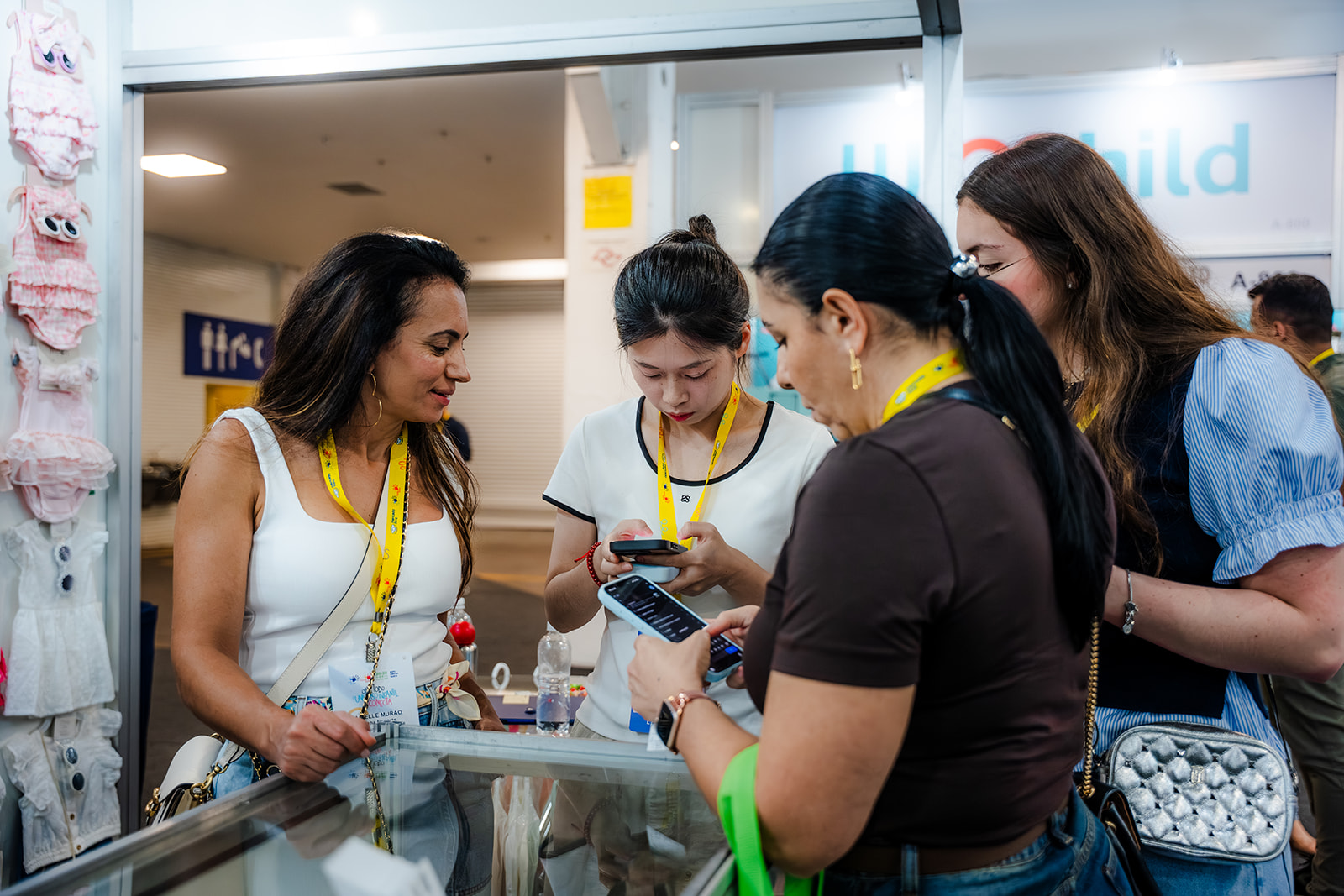
Making that connection depends on finding the right companies. In B2B environments, showcasing manufacturing capabilities can be just as important as presenting finished products. Buyers attending a trade show focused on the children’s sector may include retail chains looking for new products for their stores as well as companies searching for manufacturing partners to develop their own branded lines.
For manufacturers, meeting these professionals face to face can change the direction of a sales conversation. A product displayed at a booth may become part of a retailer’s assortment, lead to an exclusive collection, or serve as the starting point for a private-label project.
Fit Pueri Expo brings together manufacturers, brands, distributors, and buyers from across the children’s market in an environment designed for business. For exhibitors, it is an opportunity to showcase not only what they already sell, but also what they are capable of producing for other companies.
Want to showcase your products and meet buyers looking for new manufacturing partners? Click here to learn how to exhibit at Fit Pueri Expo.
Frequently Asked Questions
What is private label in the children’s market?
It is a business model in which a company outsources the manufacturing of products for babies and children and sells them under its own brand. Production is handled by a specialized manufacturer according to the specifications established for the project.
What types of children’s products can be manufactured under a private-label model?
The model can be used across a wide range of categories, including clothing, baby essentials, cosmetics, hygiene products, baby bottles, pacifiers, feeding products, accessories, toys, furniture, and décor.
What are the advantages of private label for manufacturers?
Manufacturing for other companies can expand a manufacturer’s B2B client base, make better use of available production capacity, and generate contracts with retailers, distributors, and other brands, including projects for exclusive product lines and collections.
What do buyers look for in a private-label manufacturer?
Quality, production capacity, minimum order quantities, lead times, certifications, traceability, customization options, and experience within the category are among the criteria commonly considered during negotiations.
How can manufacturers find buyers interested in private-label children’s products?
B2B trade shows such as Fit Pueri Expo bring manufacturers together with retailers, distributors, brands, and other buyers in the children’s sector. Face-to-face meetings can lead to supply agreements, exclusive product lines, and private-label projects.